
Is Your Dog Overweight? Here's How to Tell (And What to Do About It)
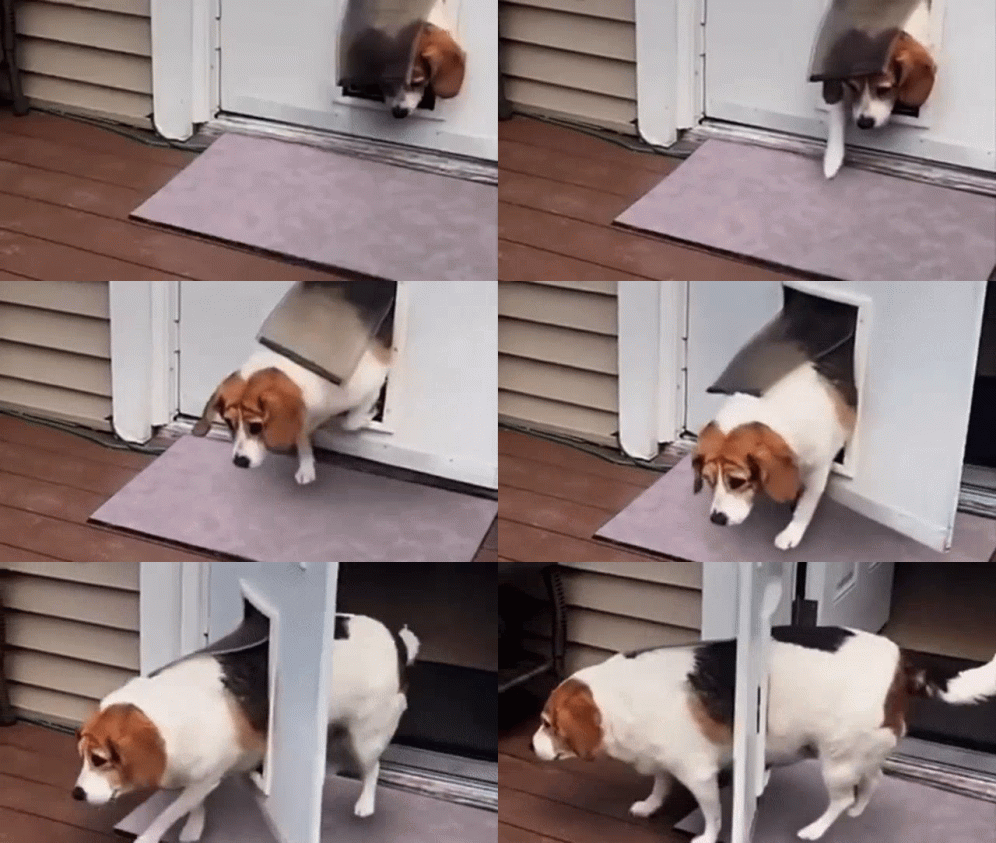
I talk about dog food a lot around here. Like, a lot. But there's a conversation I don't see happening enough in the dog world, and it's one that honestly needs to happen more: Is your dog at a healthy weight?
Here's the hard truth. Just like us Americans, over half of the dogs in the United States are overweight or obese. And most of their owners don't even realize it. We've all gotten so used to seeing chunky dogs that we've kind of lost sight of what a healthy dog actually looks like.
I'm not here to shame anyone. Trust me, I love spoiling my dogs too. But carrying extra weight isn't just a cosmetic thing. It can shorten your dog's life, cause joint problems, and lead to serious health issues down the road. So let's talk about it.
How to Tell If Your Dog Is Overweight
This is the number one thing I want every dog owner to learn. Forget the scale for a minute. The best way to check your dog's weight is with your own two hands and eyes.
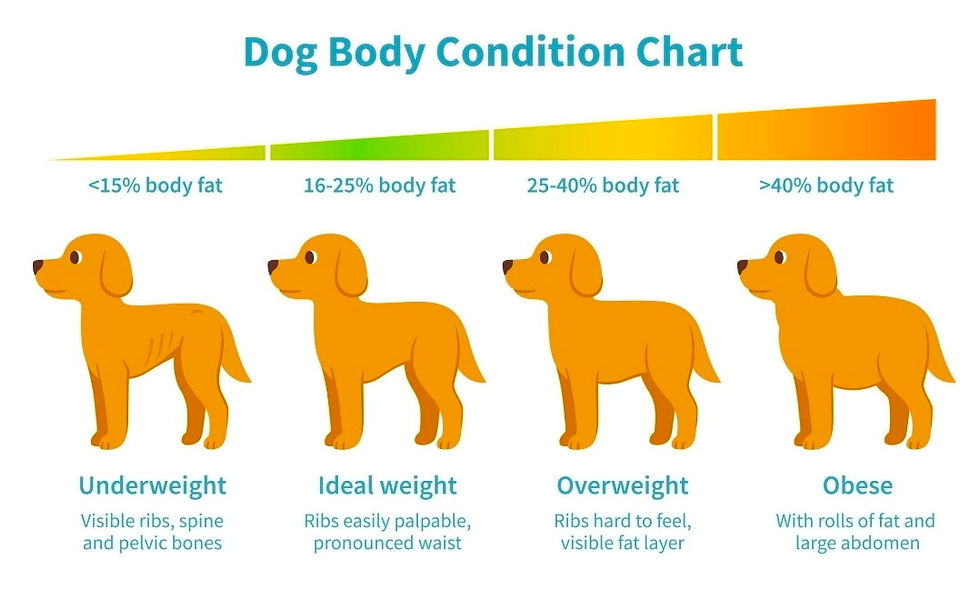
The Rib Check
Run your hands along your dog's sides. You should be able to feel their ribs without pressing hard. You don't need to see them necessarily, but you should definitely be able to feel them with light pressure. If you have to dig around to find ribs? That's a problem.
The Waistline Check
Stand above your dog and look down. You should see a visible tuck or narrowing behind their ribcage before the hips. If your dog looks like a sausage from above with no waist definition, they're carrying extra weight.
The Side Profile
Look at your dog from the side. Their belly should tuck up from the chest toward the back legs. If their belly hangs down level with or below their chest, that's excess weight.
What a Healthy Dog Body Should Look Like
A dog at a healthy weight has a visible waistline when viewed from above, an abdominal tuck when viewed from the side, and ribs you can easily feel under a thin layer of covering. They should look athletic and defined, not round.
I know some breeds naturally carry more bulk, and puppies go through awkward growth stages. But across the board, these checks work for Aussiedoodles and most other breeds. If you're unsure where your dog falls, your vet can do a body condition score at your next checkup. Ask them about it. They'll be happy you did.
Three Questions Every Dog Owner Needs to Ask Themselves
Before you start Googling "how can I reduce my dog's weight fast" or looking for the fastest way for a dog to lose weight, I need you to sit down and honestly answer three questions. Because nine times out of ten, the answer to why your dog is overweight is hiding in your daily routine.
1. Do You Know That the Feeding Amount on Your Dog Food Bag Is Per Day, Not Per Feeding?
Read that again. Per. Day.
This is probably the single biggest mistake I see dog owners make, and I don't blame them one bit. The feeding guidelines on the back of your kibble bag show you how much food your dog needs in a 24-hour period. Not per meal. Not per scoop.
So if the bag says one cup for your dog's weight, and you're feeding one cup in the morning and one cup at night? You're feeding double what your dog needs. Every single day. That adds up fast.
Go check your bag and read it for yourself.
2. How Many Treats Are You Feeding?
I already touched on this in our dog food blog, but it's worth repeating. Treats are calories. Period.
Those little training treats, the dental chews, the "just because I love you" biscuits... they all count. And most commercial dog treats are loaded with calories. A few treats a day on top of regular meals can easily push your dog 20 to 30 percent over their daily calorie needs.
Here's a tip I swear by: buy a small bag of high-quality kibble in a different flavor than their regular food and use that as treats. Lamb, salmon, duck, whatever sounds exciting to your pup. It's lower calorie than most commercial treats, it won't break the bank, and your dog will absolutely think they're getting something special.
If you want real treats, work with a trusted local maker who uses quality ingredients. I love Barkiffic, a farm-to-paw dog treat company that makes healthy treats your dog will go crazy for. But even good treats need to be given in moderation.
3. Do You Feed Table Food?
Look, I get it. Those eyes. That face. The way they sit right next to you at dinner like they haven't eaten in three days, when you literally just fed them an hour ago.
But table food is one of the sneakiest ways dogs pack on pounds. A small piece of chicken here, a bite of bread there, a lick of peanut butter from the jar. It doesn't seem like much, but for a 20 to 40 pound dog, those little extras are a huge percentage of their daily calories.
And some human foods aren't just fattening. They're genuinely dangerous. Grapes, onions, garlic, chocolate, xylitol (keep that chewing gum picked up!), the list goes on. It's just not worth the risk.
If you absolutely can't resist sharing, stick to plain cooked vegetables like green beans or carrots. They're low calorie and most dogs love them. But ideally? Keep people food for people.
What Are the Risks of an Overweight Dog?
This isn't just about looks. Carrying extra weight puts real strain on your dog's body. I'm talking joint problems and arthritis, especially in active breeds like Aussiedoodles. Heart disease. Diabetes. Breathing difficulties. Shorter life expectancy. Studies have shown that dogs at a healthy weight can live up to two years longer than their overweight counterparts. Think about that. Two extra years with your best friend, just by keeping them at a healthy weight. That's worth saying no to a few extra treats.
What Should You Feed an Overweight Dog?
If you've gone through these questions and realized your dog might be carrying a little extra weight, don't panic. And please don't starve them. Crash diets are just as bad for dogs as they are for people.
Here's what I recommend:
Start with portion control. Go back to that feeding guide on the bag and make sure you're measuring correctly for a 24-hour period, split across however many meals you feed. If your dog needs to lose weight, your vet may recommend feeding for their target weight rather than their current weight.
Cut back on treats or switch to the kibble-as-treats method I mentioned above. Safe dog treats for overweight dogs are ones that are low calorie and given sparingly.
Increase exercise gradually. You don't need fancy dog exercise equipment. Start with longer walks, more fetch sessions, or swimming if your dog enjoys it. Just don't go from zero to sixty overnight, especially with an overweight dog whose joints are already working hard.
Talk to your vet. They can help you figure out your dog's ideal weight and create a realistic plan to get there. How long it takes your dog to lose weight depends on how much they need to lose, but slow and steady is always the goal.
The Food I Recommend
You already know I'm big on Kinetic Performance Dog Food. I've used it for years, and my vet consistently comments on how strong, healthy, and vibrant my dogs and puppies are.
Quality food matters just as much for weight management as portion control does. A kibble packed with cheap fillers like corn and soy is going to leave your dog hungry and unsatisfied, which leads to begging, which leads to extra treats, which leads to... you see where this is going.
What you want is a food with quality protein as the first ingredient, whole grains like brown rice or oats (not grain-free), no corn or soy fillers, and added vitamins and nutrients to keep your dog thriving.
Kinetic checks every one of those boxes. And when your dog is eating nutrient-dense food that actually satisfies them, they're less likely to beg for extras between meals.
If you're a Fine and Dandy family, you know that my puppy agreement asks you to keep your pup on Kinetic or one of my other approved foods for the first year. If Kinetic isn't available in your area or doesn't fit your budget, just reach out and I'll point you to a solid alternative.
Will My Dog Lose Weight If I Just Feed Them Less?
It's not quite that simple. Feeding less of a low-quality food doesn't fix the problem, because your dog still isn't getting the nutrition they need. They'll feel hungrier, beg more, and you'll be tempted to give in.
The real answer is feeding the right amount of a high-quality food, cutting unnecessary treat calories, skipping the table scraps, and making sure your dog is getting regular exercise. It's the same boring advice that works for humans too, honestly. No magic pills, no miracle diets. Just good nutrition and consistency.
Is It Okay for a Dog to Be Slightly Overweight?
I hear this one a lot. And I understand the thinking. A few extra pounds doesn't seem like a big deal for us, so why would it matter for a dog?
Here's the thing. Your dog is a lot smaller than you. Even five extra pounds on a 30-pound dog is the equivalent of roughly 25 extra pounds on an average person. That's not "slightly" anything. That's a significant amount of extra stress on their heart, joints, and organs.
So no, I don't think it's okay to brush off extra weight as no big deal. Not when the fix is usually as simple as measuring food correctly and cutting back on treats.
FAQ: Overweight Dogs
How can I tell if my dog is overweight based on breed? Every breed has a general weight range, but the best method is hands-on. Use the rib check, waistline check, and side profile check described above. Your vet can also assign a body condition score that accounts for your dog's specific breed and build.
What is the fastest way for a dog to lose weight? There's no healthy shortcut. The fastest safe approach is correcting portion sizes, eliminating excess treats and table food, and increasing daily exercise. Most dogs will start showing results within a few weeks of consistent changes. Talk to your vet before making any big dietary shifts.
What are the symptoms of obesity in dogs? Difficulty breathing or getting winded easily, reluctance to exercise or play, trouble getting up or climbing stairs, no visible waistline, and ribs you can't feel. If you're noticing any of these, it's time for a vet visit.
What can I feed my overweight dog to lose weight? A high-quality, nutrient-dense kibble fed in the correct portions. I recommend Kinetic Performance. Avoid grain-free diets and foods packed with fillers. Your vet may also recommend a specific weight management formula depending on how much weight your dog needs to lose.
How long will it take my dog to lose 10 pounds? It depends on the dog, but healthy weight loss is about 1 to 2 percent of body weight per week. For a dog that needs to lose 10 pounds, you're looking at several months of consistent effort. Slow and steady wins here.
Is it okay to feed your overweight dog once a day? I don't generally recommend it. Splitting meals into two feedings helps keep blood sugar stable and reduces the begging that comes with long gaps between meals. Just remember, the total amount across both meals should equal the daily recommended amount on the bag, not double it.
What burns the most calories for dogs? Swimming is one of the best full-body exercises for dogs and it's easy on joints. Beyond that, brisk walks, fetch, and active play sessions all burn significant calories. Even just increasing your daily walk by 10 to 15 minutes can make a real difference over time.
How long can overweight dogs live? Studies have shown that overweight dogs may live up to two years less than dogs at a healthy weight. That's a significant chunk of time you could be missing out on with your best friend.
What is the best weight management dog food? Look for food with quality protein as the first ingredient, whole grains, no corn or soy, and a strong nutritional profile. I use and recommend Kinetic Performance because it checks all those boxes and I've seen the results firsthand across years of raising healthy litters.
Have questions about your dog's weight or what to feed them? I'm always happy to chat with my Fine and Dandy families. Call or text me at 828-400-2688 or reach out through my website.


Comments